The bare necessities
 by Mark Evans
Bare-rooted plants look like they shouldn’t work. A rose or fruit tree dug straight from the ground with no soil or pot, roots wrapped only in damp hessian or sawdust. Yet this has been the standard way to grow and sell deciduous plants for centuries, long before plastic pots existed, and it remains one of the cheapest ways to build a garden.
The trick lies in dormancy. Once a deciduous plant drops its leaves, it stops transpiring and its metabolism slows right down, so roots can sit exposed for days or weeks without harm – try that with an actively growing plant in summer and it would be dead within hours. Nurseries exploit this dormant window to lift plants straight from their growing rows, and skip the costs associated with transporting pots and potting mix, a saving passed on to us in lower-priced, often better quality, bare-rooted stock.
There’s another reason to make the most of bare-root season while it lasts. Many heritage and less common varieties such as old-fashioned roses and unusual heirloom apple cultivars only ever get produced in bare-root form. It isn’t commercially viable for growers to pot up and hold rarer stock year-round, so once the season ends, these varieties often vanish from nurseries until next winter. And right now is the best time to purchase and plant them.
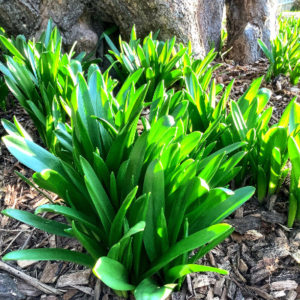
Emerging bluebell bulbs
Buying bare-rooted is only half the job – planting technique matters just as much. If the roots feel dry, soak the whole root ball for an hour or two first. Dig a hole wide enough for roots to spread out naturally rather than curl, since curled roots often struggle for years. Plant at the same depth the tree was at in the nursery row, judged by the soil mark on the trunk and, for grafted roses and fruit trees, keep the graft union just above soil level. Firm the soil gently as you backfill, then water deeply to settle it around the roots. Do all that, and by spring you’ll barely recognise the bare, dormant stick you planted back in August.
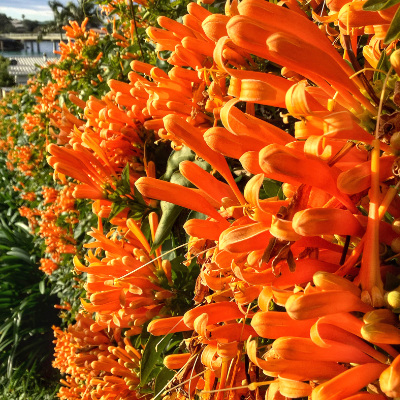
Around the town gardens, the first jonquils and daffodils are nodding their heads in shadier corners, a reminder that spring bulbs are best bought and planted while the soil’s still cool, before it warms up and works against you. Pyrostegia venusta (orange trumpet vine) is also erupting in swathes of orange.
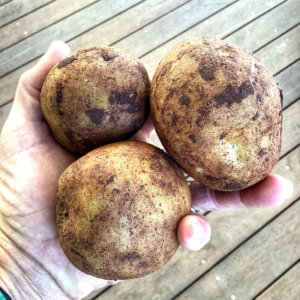
Time to chit your potatoes
This month in the vegie garden we’re still mostly limited to planting leeks, shallots, onions, peas, broad beans and lettuce, plus rocket, silverbeet and the quick-growing radish (ready in twenty-three days). If you’re growing spuds, now’s the time to chit your seed potatoes: cut into sections, stand eyes-up in egg cartons on a sunny windowsill, and let them sprout ready for planting later in the month. It’s also your last chance to spray peaches, nectarines and apricots for peach leaf curl before the buds open, and a good time to plant asparagus crowns if you’re after a bed that rewards you for a decade or more.
In the wild places around the Triangle, the roadsides are having their moment, with several wattle species now flowering together in a proper golden flush.
Got a gardening question, plant mystery or pest problem? Drop us a line at gardening@thetriangle.org.au. We’d love to hear from you.
Happy gardening.
Photo top right: Orange trumpet vine is currently all aflame.