Right Plant, Wrong Place … Again!
 by Mark Evans
One of the advantages of gardening is that very few decisions are permanent. Plants can be moved, divided and rearranged as your garden evolves and your ideas change. That supposedly short plant you tucked in along the edge grows much taller than expected, the one you planted in the shade needs more sun (or vice versa), that climber would be better suited elsewhere, that perennial needs dividing and those two plants would simply look better side by side.
July is one of the best times to make these changes. In mid-winter, many plants will have paused their growing, exhausted their flowering and fruit or seed production, and will be gathering energy for the upcoming spring. Digging them up now results in minimal disturbance, and they will be settled into their new position, ready to grow again when warmer weather arrives.
Before you move a plant, it is beneficial to prune it first, as moving a plant disturbs the root system and reduces its ability to absorb water and nutrients. Reducing the above-ground growth helps the smaller root ball support the whole plant while it re-establishes itself. The other thing to do before moving a plant is to have the new planting hole prepared and ready to go, limiting the time the plant spends out of the ground.
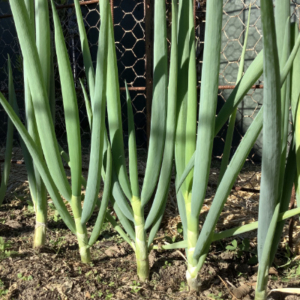
Shallots
Before you dig, imagine the plant in a pot. You should aim to dig out a root ball at least that size. The more roots you can bring with the plant, the more successful the move is likely to be. Chop or dig right the way around the plant first, then try to lever it out from below. Larger roots should be cut cleanly with sharp secateurs. Support the root ball while transferring the plant to its new hole and ensure it is sitting at the same depth as it was in its original location.
Once the plant is in position, flood the planting hole and root ball with water and allow it to soak away. Backfill, then give the plant another drink, this time with some added soil conditioner such as seaweed extract or fish emulsion. Hold off on fertilising until you begin to see signs of new growth.
Soon enough you’ll be looking around the garden and wondering whether that plant over there might be happier somewhere else. July may be one of the best times to move plants, but don’t let that stop you at other times of the year. Most gardeners know that the best time to do many jobs is when the weather is reasonable, the soil is moist and you happen to have a spare afternoon. As we like to say, sometimes the best time to prune is simply when the shears are sharp.
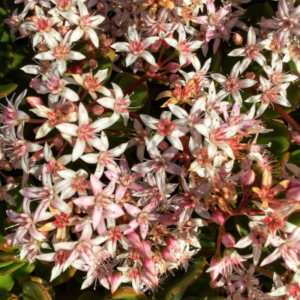
Jade flowers
Meanwhile, around the town gardens, the camellias continue to shine and the normally nondescript, hardy, succulent shrub Crassula ovata (jade plant) is bursting into bloom as it enters peak flowering season. The banksias and grevilleas are also enjoying a flowering flush, and the citrus are beginning to ripen.
In the wild places, on the roadsides around the Triangle, the bushland is rather homogenously green at present, with few flowers currently obvious.
This month in the vegie garden we continue catering to the cooler weather and so are mostly still limited to planting leeks, shallots and onions, peas of any description, broad beans and lettuce.
Got a gardening question, plant mystery or pest problem? Drop us a line at gardening@thetriangle.org.au. We’d love to hear from you.
Happy gardening!
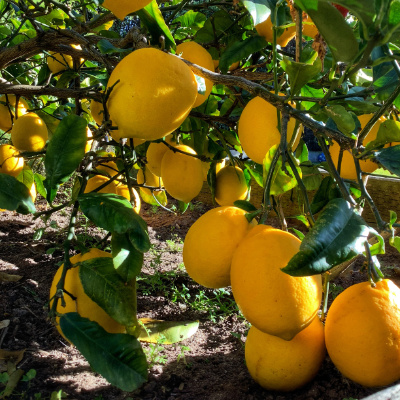
Photo top right: Lemons galore