Beauty without the Burden
 By Mark Evans
In a formal garden, every hedge is crisply clipped, plant spacing is precise and repeated planting patterns create an immediate sense of calm and intention. The effect is composed and deeply satisfying.
Yet this same symmetry carries a hidden vulnerability. When a plant dies, the gap becomes glaring. Replacing it with a small, inexpensive specimen may leave an obvious void for years, whilst buying a mature replacement to restore the balance immediately may be expensive and unrealistic. In highly formal designs, every imperfection stands out.
By contrast, looser gardens rarely feel visually wrong. Plants self-seed, spill into one another, and overlap in soft layers. Diversity and natural regeneration absorb losses into the whole rather than spotlighting every gap. The eye accepts the gentle shifts as part of the living scene.
Of course, complete chaos brings its own difficulties. Without structure, a garden can feel exhausting and hard to maintain. The eye needs places to rest.
Many of the most liveable home gardens sit comfortably between these two approaches, in a style which we might call relaxed formalism.
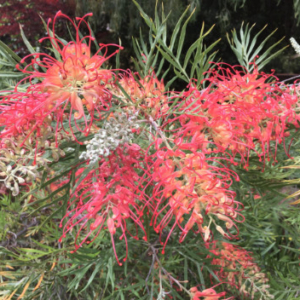
Grevillea ‘Superb’
This style retains the strengths of formal design with a strong underlying structure, clean lines along paths and edges and strategic repetition of key plants for rhythm and calm. At the same time, it allows softer, more flexible planting that can absorb changes. Self-seeding is welcomed in some areas while the most unruly growth is gently edited. Symmetry is suggested rather than strictly enforced. The garden has rules, but they are not rigid.
This balanced approach is increasingly attractive for practical as well as aesthetic reasons. Gardens are expensive to establish and maintain. Water is less predictable, plant prices continue to rise and, as both gardens and gardeners age, the burden of constant control becomes harder to sustain. A missed pruning, a tough summer or the loss of a key plant should not unravel the entire picture.
Relaxed formalism creates gardens that absorb change more gracefully. It combines enough repetition and structure to feel intentional and balanced, while embracing enough spontaneity and randomness to shield against any losses. The design negotiates with reality instead of fighting against it.
In the end, the most satisfying gardens are rarely those held in perfect order at all costs. They are the ones where structure and life are allowed to coexist. Frost, drought, time and the plants themselves all contribute to the evolving picture. Relaxed formalism offers a more resilient path, one where a garden can remain beautiful even when it is not flawless.
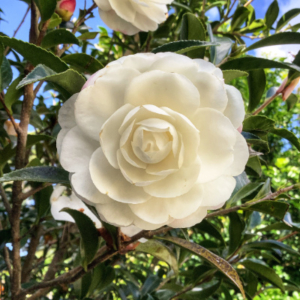
Camelia sasanqua Early Pearly
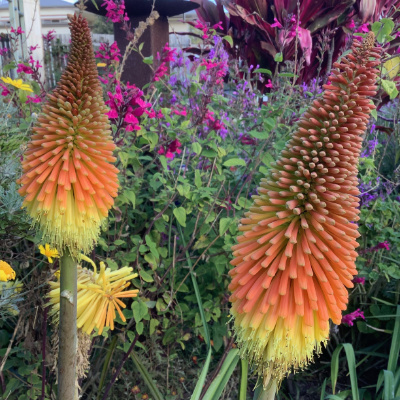
Around town, hibiscus still offers cheerful colour after months of blooming. Grevilleas are throwing out another round of flowers. Camellias are showing off their seasonal best and kniphofia (red hot pokers) are lighting up gardens like flaming torches.
In the veggie patch, options are thinning. It’s your last call for planting garlic. Alliums like onions and shallots can still go in, but that’s about it for now.
Got a gardening question, plant mystery or pest problem? Drop us a line at gardening@thetriangle.org.au. We’d love to hear from you.
Happy growing!
Photo top right: Red hot pokers all aflame.