Bushfire Gardening
 by Mark Evans
During the Coolagolite fire of October 2023, flames swept through the bush at the Murrah right up to the edge of one property, and stopped at a wide, mown, green lawn. No garden can make a house fireproof, and a lawn is no guaranteed firebreak, but thoughtful landscaping and maintenance can help reduce the risk.
The NSW Rural Fire Service (RFS) calls the managed area around a home an Asset Protection Zone. The aim is to reduce fuel and avoid giving fire an easy path to the house. Keep non-combustible surfaces such as paving, gravel and paths close to the walls. Remove lower tree limbs to around two metres above the ground and, where practical, keep tree canopies two to five metres apart. Avoid continuous runs of vegetation towards the house, and keep shrubs well clear of windows and doors. Think twice about timber, too. At another nearby property, sleeper steps and retaining walls became additional fuel. Stone, steel and concrete won’t burn like timber.
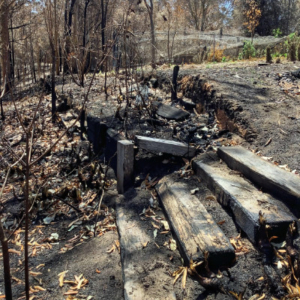
Use non-combustible materials near the house.
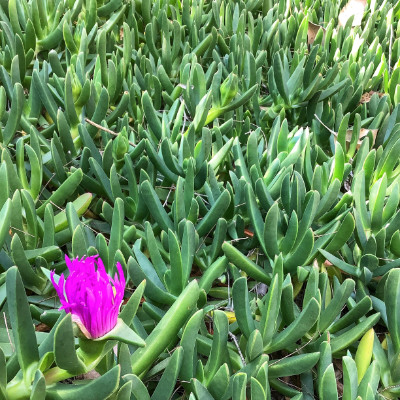
No plant is fireproof. Given enough heat, almost anything can burn, but some plants are less flammable than others. Be wary of oily foliage, fine or papery leaves, loose, stringy bark and plants that retain dead leaves and twigs. Favour plants with fleshy, moisture-rich leaves, low oil content and little dead material. Succulent groundcovers are worth considering, and our local native Carpobrotus glaucescens (Pigface) is a standout, tough, salt-tolerant and water-rich.
With summer approaching, November is the time to get on top of things. Keep lawns short and remove dry grass and clippings. Rake up leaf litter and loose bark, including debris caught in gravel and pebble mulch. Clean gutters and roof valleys, prune branches overhanging the roof, and move woodpiles, spare timber and flammable mulch well away from the house. Check that hoses reach around the property.
Remember that embers can travel well ahead of a fire front and ignite homes even where gardens are carefully maintained. Check for gaps around windows, doors and vents, and make sure the house itself is prepared. The appropriate Asset Protection Zone varies with factors such as slope and surrounding vegetation, so consult RFS guidance for your property. Keep your Bush Fire Survival Plan up to date, and on Extreme and Catastrophic fire danger days, leaving early is the safest option. Visit www.rfs.nsw.gov.au for advice.
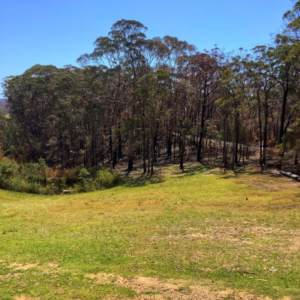
Wide areas of mown lawn may help protect your home.
Meanwhile, around town, one of our favourite canopy colour combinations is emerging as Brachychiton acerifolius (Illawarra Flame Tree), Jacaranda mimosifolia (Jacaranda) and Grevillea robusta (Silky Oak) begin their red, purple and golden-yellow displays. You may be lucky enough to spot all three together.
Along roadsides around the Triangle, scrambling purple Hardenbergia violacea (Purple Coral Pea) and golden Eggs and Bacon bushes (Daviesia spp. and Pultenaea spp.) are still flowering, joined by the upright, two metre tall Ozothamnus diosmifolius (Rice Flower), with its tight clusters of small, white, papery flowers.
November is also a good month to plant beans, capsicum, chillies, corn, cucumber, eggplant, melon, pumpkin, tomato and zucchini. Continue sowing beetroot, carrot, lettuce, onions, potatoes and silver beet.
Got a gardening question, plant mystery or pest problem? Drop us a line at gardening@thetriangle.org.au. We’d love to hear from you.
Stay safe.
Photo top right: Pigface is a succulent fire-wise native ground cover.