Plant now for a stronger spring
 Most people assume the best time for planting out and expanding the garden is when spring arrives. It feels logical. Plants come alive again after winter, nurseries fill with colour and renewal is in the air.
We plant enthusiastically and, sure enough, growth follows. But as spring turns to summer and temperatures climb, that flush of new growth often struggles to cope. Despite our best watering efforts, plants wilt because the growth above ground has outpaced the growth below ground.
Roots grow according to soil temperature. In autumn the soil still holds months of stored summer warmth while nights cool and days shorten. Plants are no longer pushing soft leaf growth, so energy shifts underground. For a plant, this is perfect root-building weather.
If you plant something now it may appear to do almost nothing for months, but beneath the surface, roots extend steadily through warm soil without the stress of long hot days pulling moisture from the leaves. By the time spring arrives, autumn plantings already have a head start and behave like established plants when summer hits rather than newcomers.
This applies to almost everything that lives longer than one season, such as trees, hedges, shrubs, grasses, natives and most perennials. Even deciduous trees, traditionally planted in winter, will happily establish now. Winter planting mainly suits the bare-root industry rather than coinciding with ideal growing conditions.
The exception to the rule is summer annuals. Short-lived, warm-season flowers such as petunias, zinnias and cosmos, along with vegetables like tomatoes, basil, zucchini and cucumbers, still prefer spring planting, as does anything especially frost-sensitive.
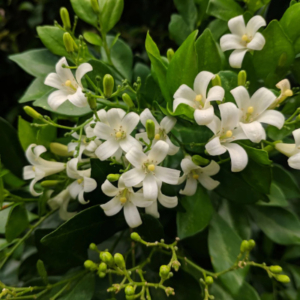
Murraya paniculata
Assuming spring must be the best planting time simply because that’s when we notice growth is a mistake. Spring is when plants show results, not when they prepare for them. By the time we see the surge, the work that supports it should already be done.
Plant now for a stronger spring and let the roots prepare the garden long before the season announces it.
Meanwhile, around the towns we have noticed the fragrant hedge favourite Murraya paniculata (murraya) is in full bloom, as are the tough old Nerium oleanders (oleander). If you are planning a murraya hedge, consider interplanting with Michelia figo (port wine magnolia) for additional fragrance, akin to bubble gum. Another current eye-catcher are some colourful mixed stands of red and yellow canna lilies.
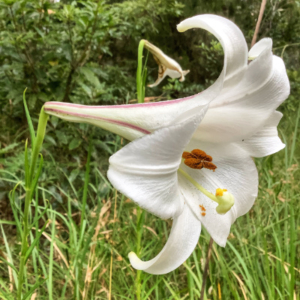
Lilium formosanum
In the wild places on the sides of the road, one of the current standouts is unfortunately the ornamental weed Lilium formosanum (Taiwan Lily) that is easily recognised by its large (up to 15 cm long) trumpet-shaped white flowers, pointing horizontally atop a single strap-leaved main stem (to two metres). The flowers are highly fragrant, and you’ll be doing the bush and yourself a favour if you pick some to take home and put in a vase, thereby preventing seed spread.
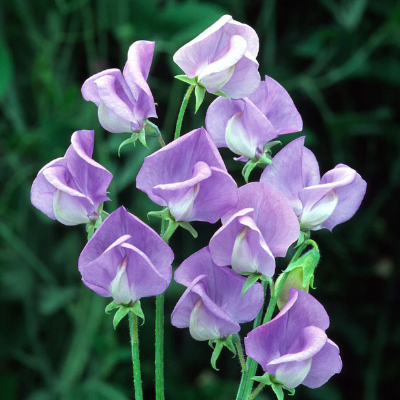
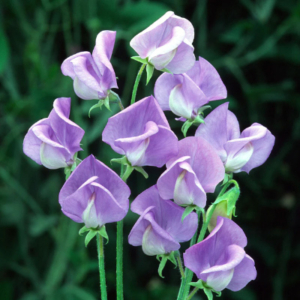
Finally, this month in the vegie garden we will be preparing for the first of our pea crops. Whether it’s snow peas or pod peas, March is the month. On St Patrick’s Day, 17 March, we also like to plant our sweet peas in anticipation of late winter colour and fragrance. Remember, peas climb and beans twine, so give your peas some mesh or chicken wire to scramble up.
If you have any comments, gardening questions or plant or pest identification problems, please send them through to gardening@thetriangle.org.au and I will get back to you personally.\
Photo top right: Sweet peas
Mark Evans